

When an argument turns into repetition, interruptions or a contest over who is right, a pause can protect the conversation. The useful skill is not only stopping; it is making a realistic plan to return.
For ordinary disagreements, name the issue, ask for space and agree when to try again. If someone blocks your exit, threatens you or makes stopping dangerous, prioritize safety and specialist support rather than negotiating the perfect pause.
A pause with a reliable return
Read the guide as text
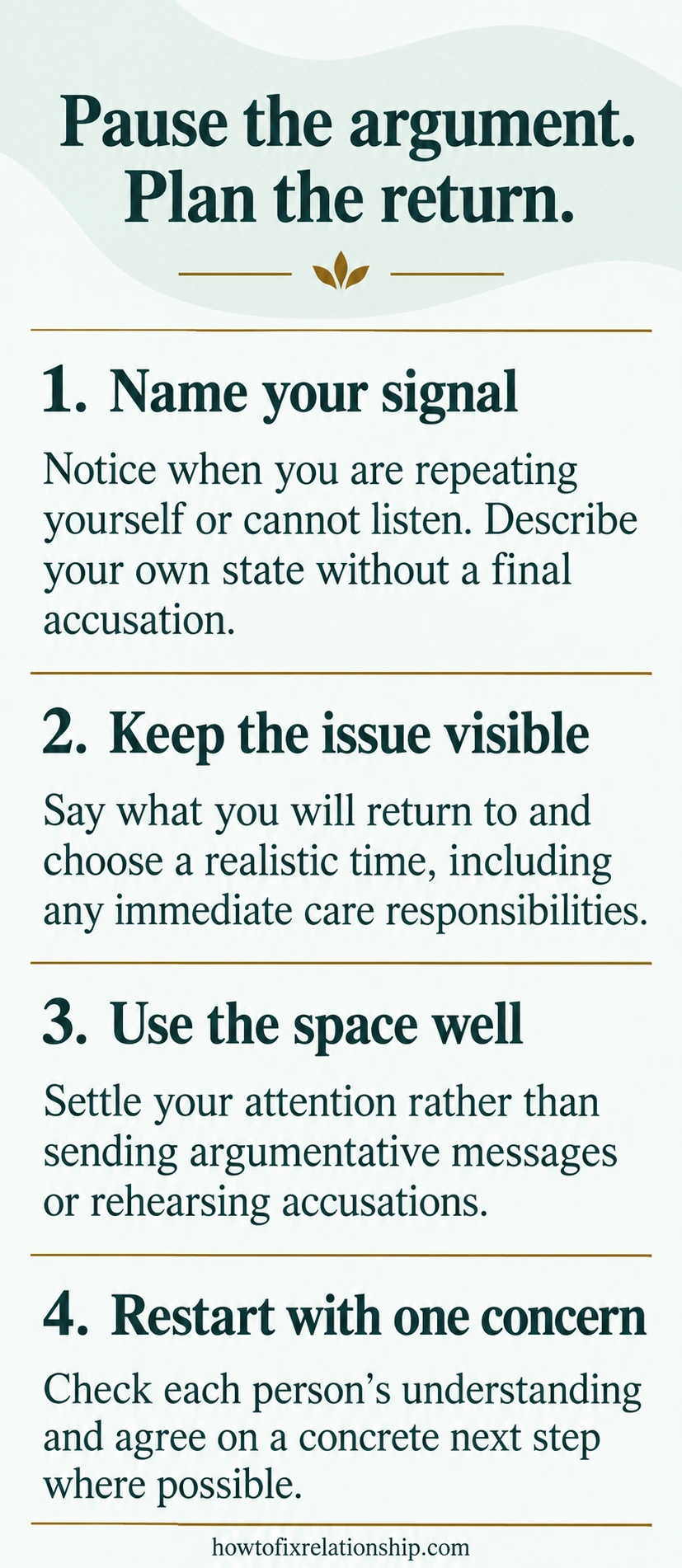
- Name your signal. Notice when you are repeating yourself or cannot listen. Describe your own state without a final accusation.
- Keep the issue visible. Say what you will return to and choose a realistic time, including any immediate care responsibilities.
- Use the space well. Settle your attention rather than sending argumentative messages or rehearsing accusations.
- Restart with one concern. Check each person’s understanding and agree on a concrete next step where possible.
Notice when listening is getting harder
Notice your own signals: talking faster, repeating a point, feeling hot or planning a reply while the other person is still speaking. Quietness can also mean someone is overwhelmed; it does not automatically mean they are withholding.
Choose a signal you can describe without judging your partner: “I keep repeating myself and I am struggling to listen.” You can request a pause before either person reaches a breaking point.
Mayo Clinic’s anger-management guidance recommends thinking before speaking and expressing concerns clearly once calm. A break can create room to do that.
Agree on what a pause means while things are calm
Discuss the phrase you will use, where you might take space and how you will return. “I need a pause” is easier to understand when both people know it means stopping this conversation temporarily.
Include practical limits. A walk, separate rooms or a later phone call may suit different circumstances. Neither person should have to surrender their phone, accept monitoring or remain somewhere unsafe to make the arrangement work.
Ask clearly and name a possible return
Try: “I want to talk about the budget, but I am too upset to listen well. Can we pause and try again at seven tonight?” Name the issue, your need and a realistic next step.
Avoid a final accusation or a threat to end the relationship if you mean only to stop the argument. If your wording comes out harshly, clarify it: “I meant that I need a break from this conversation. I still want to address the problem.”
Choose a time you can actually keep
Consider work, sleep, childcare and how much attention the issue needs. There is no break length that works for every disagreement. “After dinner tomorrow” gives more clarity than “sometime later,” provided both people can make that time.
If a decision cannot wait, separate the immediate task from the larger disagreement. You might settle tonight’s pickup arrangements and return to the ongoing transport problem at the weekend.

If circumstances change, acknowledge the missed plan and suggest another workable time. A return time is useful because it creates a route back, not because it guarantees that every feeling will have settled.
Keep immediate responsibilities covered
A pause does not remove childcare, cooking, transport or other care needs. When safe, agree who will handle anything urgent before moving apart: “I will finish bedtime; let’s leave the budget until the children are asleep.”
Keep children out of the disagreement. They should not carry messages, monitor an adult or persuade parents to resume talking.
Use the space to settle
Choose something manageable, such as water, quiet, a walk or slow breathing. Rehearsing accusations, sending hostile messages or posting the argument online can keep the exchange going.
You can ask a trusted person for support without recruiting them to win the dispute: “Help me settle enough to think about what I want to say.” If you are exhausted or affected by alcohol or other substances, propose a time when you can participate more clearly.
Prepare one concern and one question
Write down the event, its effect and your request. “The guest numbers changed after I bought the food; can we confirm changes before shopping?” is easier to discuss than “You never respect anything I do.”
Add a question that leaves room for information you may be missing: “What made it difficult to update me?” Curiosity does not require dropping your concern.
Keep these notes brief. Preparation should make the issue easier to understand, rather than turn the pause into time spent collecting a longer list of grievances.
Restart with one issue
Check that it is still a workable time, then name the topic. Let each person explain and reflect back what you heard before defending your own account. Understanding what someone meant does not require agreeing that their behavior was acceptable.
If other concerns arise, note a time to discuss them. Include a connected pattern when it explains the current issue, but avoid reopening every past disappointment. If you are unsure whether repair is mutual, use the relationship repair checklist to organize that separate question.
Agree on one practical change
A useful agreement names an action, who is responsible and when it will happen. “We will both confirm guest numbers before groceries are bought” is clearer than “Be more considerate.” Include how you will update each other if the plan changes.
If you cannot agree, identify what remains unresolved and whether you need information, another discussion or appropriate outside support. You do not need to manufacture an agreement just to finish.
Progress does not require immediate forgiveness, physical affection or pretending you are no longer upset. You can recognize a practical step while allowing feelings more time.
What a reliable return can look like
For an illustrative example, imagine Leila and Owen disagree about family visits. Leila notices she is interrupting and asks to pause until after dinner. They keep the topic clear, handle their agreed tasks and avoid continuing the dispute by text.
When they return, they focus on the next visit. Leila wants more notice; Owen wants flexibility for visiting relatives. They agree to check with each other before extending an invitation to their home. The agreement accommodates different preferences without proving either person wrong or promising an end to future disagreements.
Notice when pauses become repeated avoidance
A pause loses its purpose if the conversation is postponed until someone gives up. Ask about the pattern: “I support taking breaks, but this issue still needs attention. What return plan can we realistically keep?”
Notice whether both people acknowledge the concern and help find another time. Repeatedly using silence, disappearance or access to money or transport to punish someone calls for more than a better conversation schedule.
Put safety ahead of the return plan
If someone follows you from room to room, blocks an exit, threatens you or takes your phone, focus on getting safer. You do not need to negotiate the right return time before seeking help.
The Hotline’s safety-planning resource can help you consider practical options. Use local emergency help for immediate danger. For an ordinary disagreement where both people are safe, start with one clear sentence, a workable return and one issue you want to understand.
Draft a pause-and-return message
Choose why a pause would help. Add an achievable return plan when you adapt the draft.
A return agreement does not require staying in a threatening situation. If you fear retaliation or cannot pause safely, seek private support.
Use the questions and examples in the article above; the draft builder needs JavaScript.
15 questions readers ask
1. When is it useful to pause an argument?
Consider a pause when repetition, interruptions or rising intensity make listening difficult. You do not need to wait until the exchange is out of control.
2. How can I ask without blaming my partner?
Describe your state and the issue you want to return to. For example, say you are too upset to listen well and propose a time to discuss the budget.
3. Do I need permission to leave an unsafe situation?
No. If stopping or leaving is dangerous, prioritize getting safer and appropriate help rather than negotiating a return time.
4. How long should the break last?
There is no universal duration. Choose enough space to settle and a realistic return time around responsibilities and capacity.
5. What if we cannot finish the discussion today?
Agree on any immediate practical need and a later time for the larger issue. Acknowledging the concern helps keep it from disappearing.
6. Should we agree on a signal in advance?
That can help in an ordinary safe relationship. Discuss the phrase, what a pause means and how you will return while things are calm.
7. What happens to childcare during a pause?
Responsibilities still need attention. When safe, clarify who handles immediate care and never ask a child to mediate or monitor an adult.
8. What should I do during the break?
Choose something that helps you settle, such as water, quiet or a walk. Avoid using the time to build a longer prosecution of your partner.
9. Can we keep texting the argument?
That usually continues the exchange you intended to pause. Agree on necessary practical contact while leaving the disputed issue for the restart.
10. How do we restart?
Name one topic, allow each person to explain and check what you understood before looking for solutions.
11. Do we need to agree about every detail?
No. You can acknowledge different understandings and still make a clear future agreement. Understanding does not require accepting harmful behavior.
12. What makes a useful next step?
Name an action, who will handle it and when. A specific plan is easier to review than a promise to be more considerate.
13. What if my partner repeatedly postpones the return?
Discuss the pattern and its effect. A pause that indefinitely silences concerns may require different support or decisions.
14. What if they follow me or block the door?
Treat that as a safety concern. A communication technique cannot resolve coercion; seek appropriate specialist or emergency help.
15. Can we finish while still feeling upset?
Yes. Progress does not require forced affection, immediate forgiveness or pretending all feelings are resolved. Leave room for further care and reflection.