
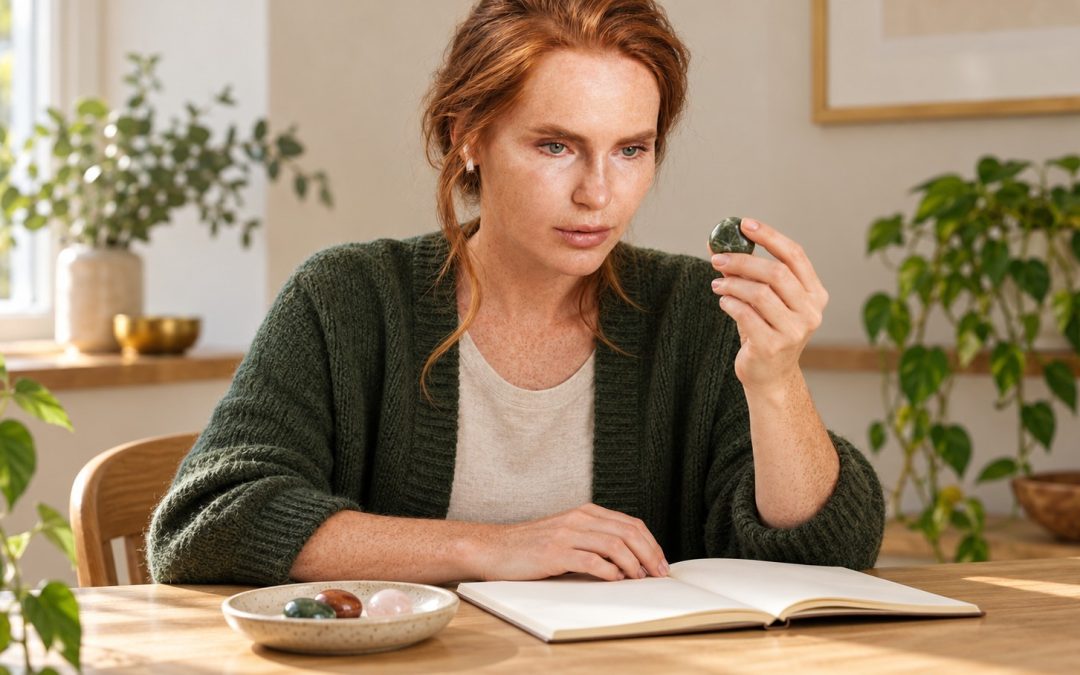
Crystals, meaningful objects and quiet rituals can have a place in a person’s spiritual life. You may enjoy holding a smooth stone, arranging a peaceful corner or pausing to reflect on what you need.
It helps to separate that personal meaning from a promise to treat illness. You do not have to buy tools, clear an aura or achieve a particular energy balance to deserve care or make a practical change in your life.
On this page
Understand what an energy-healing claim means
People use “energy” to describe different things: a spiritual belief, a sense of mood or vitality, or a claim about how the body works. Ask which meaning is being used before accepting a promised benefit.
For example, NCCIH’s information on Reiki says that it has not been clearly shown to work for a health-related purpose and that evidence does not support the energy field proposed in Reiki. That is information about Reiki; it is not a judgement about the personal value of every spiritual practice.
A relaxing or meaningful experience does not by itself demonstrate that circulation, hormones or an illness have changed. Avoid turning disappointment with a practice into blame about your beliefs or supposed blocked energy.
Choose objects for their meaning to you
You might associate turquoise with a memory, amethyst with a quiet space or a plain pebble with time outdoors. These can be personal reminders rather than objects with guaranteed effects on health, creativity or decision-making.
Use something you already own if you want to try this. A photograph, piece of fabric or ordinary notebook may serve the same purpose. There is no required set of stones or correct colour sequence to complete.
Handle objects normally and follow product safety instructions. There is no need to ingest stones, put them in drinking water or apply unidentified substances to your skin as part of a reflective practice.
Try a brief, ordinary reflection
Choose a comfortable place and an object you like. You can keep your eyes open and leave the object on a table. Notice a detail such as its colour or texture, then ask, “What needs my attention today?”
- Name what you are feeling without trying to judge its spiritual meaning.
- Write one need, such as rest, company or clarity about a disagreement.
- Choose a small action: make a meal, contact a friend or arrange a conversation.
- Stop if the practice feels uncomfortable. You can use a different activity or skip it.
No smoke, flame, special breathing pattern or paid equipment is required. A pleasant room does not need to be described as medically purified. Avoid copying ceremonies from traditions you do not understand or have permission to practise.
Protect your choices and your budget
Before buying a tool or booking a session, ask what is offered, what it costs and whether more purchases will be expected. Set a limit you can afford and take time to decide.
Promises to cure a condition, warnings that you are in danger unless you pay, or instructions to stop prescribed treatment are reasons to step back. You can decline without proving that a belief is right or wrong.
If a session involves another person, ask about touch, privacy and the option to stop. Consent to one activity does not mean consent to everything a practitioner suggests. Check qualifications separately when someone claims to provide regulated healthcare.
Keep practical support and healthcare in view
If you are worried about pain, persistent exhaustion, low mood or other symptoms, speak with a qualified healthcare professional. A spiritual interpretation cannot establish the cause or replace an assessment. Discuss any complementary practice that may affect your treatment.
Likewise, a ritual cannot make a partner communicate, respect a boundary or repair a broken agreement. You can use reflection to clarify what you want, then address the situation through choices and conversations that involve the people concerned.
The useful question is whether an optional practice fits comfortably alongside your needs, values and care. You are free to keep it, adapt it or leave it behind.